

01 · Pillar
Industrial AI
Operational intelligence built for physical environments where reliability, context and real-time awareness decide whether a system is usable at all.
Hub · eight sectors · four capabilities
Artificial intelligence engineered for environments where an outage is not an inconvenience. Industrial AI is not enterprise software adapted downward, it is built for the constraints of plants, fields, refineries and cities, and judged on whether it holds in them.
What industrial AI actually means
Industrial AI is artificial intelligence designed for physical operations rather than for information work. That sounds like a distinction of subject matter, and it is not: it is a distinction of what happens when the system is wrong or absent. An AI that summarises a document badly produces a bad summary. An AI that misses a person entering a live-work zone produces nothing at all, no output, no error, no signal, and the operation carries on unaware that it was ever being watched.
That asymmetry is what shapes everything else. It is why industrial AI is measured on whether it holds continuously rather than on how it performs in a demonstration, why deployment location is an engineering constraint rather than a preference, and why a model that cannot be owned is, in many of these environments, a model that cannot be used.
Operational AI, not analytical AI
Most AI deployed in industry is analytical: it consumes history and produces insight for someone to act on later. Operational AI sits in the present tense. Its output is a finding about what is happening now, delivered to whoever is in a position to do something about it while doing something is still possible.
This changes the design of the system in ways that are easy to underestimate. Latency stops being a performance metric and becomes a correctness one, a finding that arrives after the cycle completed is a record, not an intervention. Availability stops being an SLA line and becomes the whole proposition, because a system that is watching only when the network is up is a system nobody will trust with anything that matters.
Computer vision and video analytics as the sensing layer
Industrial operations are already heavily instrumented, for pressure, flow, temperature, position, throughput. What that instrumentation does not capture is the physical scene: who is where, what they are doing, what is out of place, what is happening in the space between the machines that each know only their own state.
Cameras already cover most of that scene, which is the quiet fact that makes this practical. The estate exists, it was paid for years ago, and it is used almost entirely to explain incidents after they happen. Computer vision and video analytics turn that same estate into something read continuously, not a new sensing programme, but a new use for one that is already installed.
Scenario
The same belt in two states
A parcel count would not find this: the number is the same at both ends of the belt. What changed is the spacing, which is a property of a region rather than of any object in it — and having both states in one frame is what makes the reading legible at all.
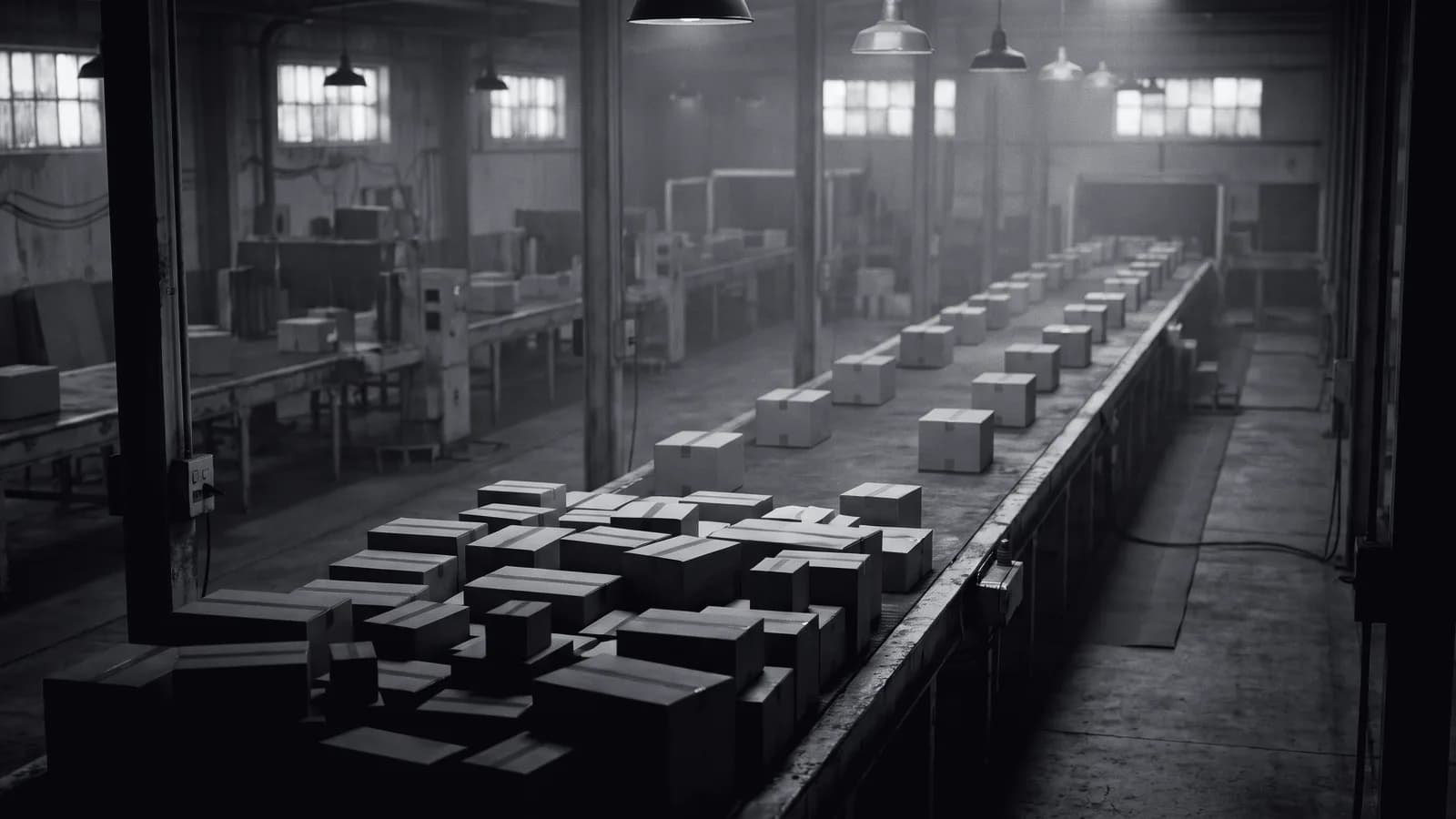
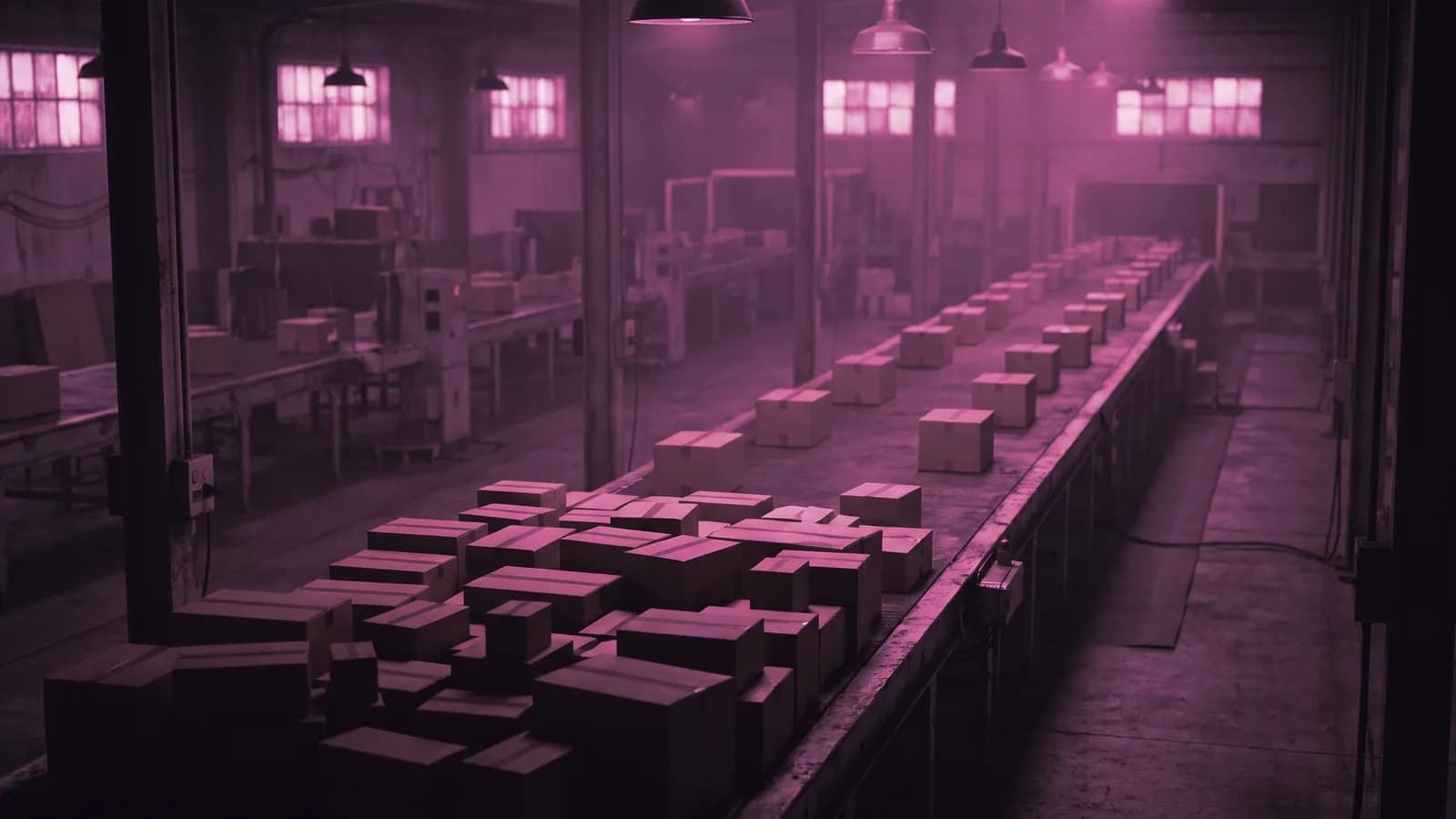
Illustrative analysis of this frame: Congestion, Parcel, Zone.
Detected regionsRegion, normalised frame coordinates
- 01CongestionScenarioX 0.19 Y 0.59 A 13.6% ∠ +5°
- 02ParcelObjectX 0.64 Y 0.32
- 03ZoneScenarioX 0.60 Y 0.32 A 1.9% ∠ +20°
What industrial AI is asked to do
- 01Industrial vision
- Visual reading of assets, zones and movement across a site, from the camera estate already installed.
- 02Pattern identification
- Recognition of recurring conditions across operating periods long enough that human attention has already lapsed.
- 03Continuous monitoring
- Sustained observation of large environments without the interruption a shift pattern imposes.
- 04Operational alerting
- Conditions surfaced to the teams responsible for acting on them, with an auditable record behind them.
Interaction
The space something used to be in
An object leaving a shelf is an event between three things: a hand, the object, and the gap it came out of. None of the three is the detection on its own, and a system that returned a list of objects would have reported nothing unusual at all.
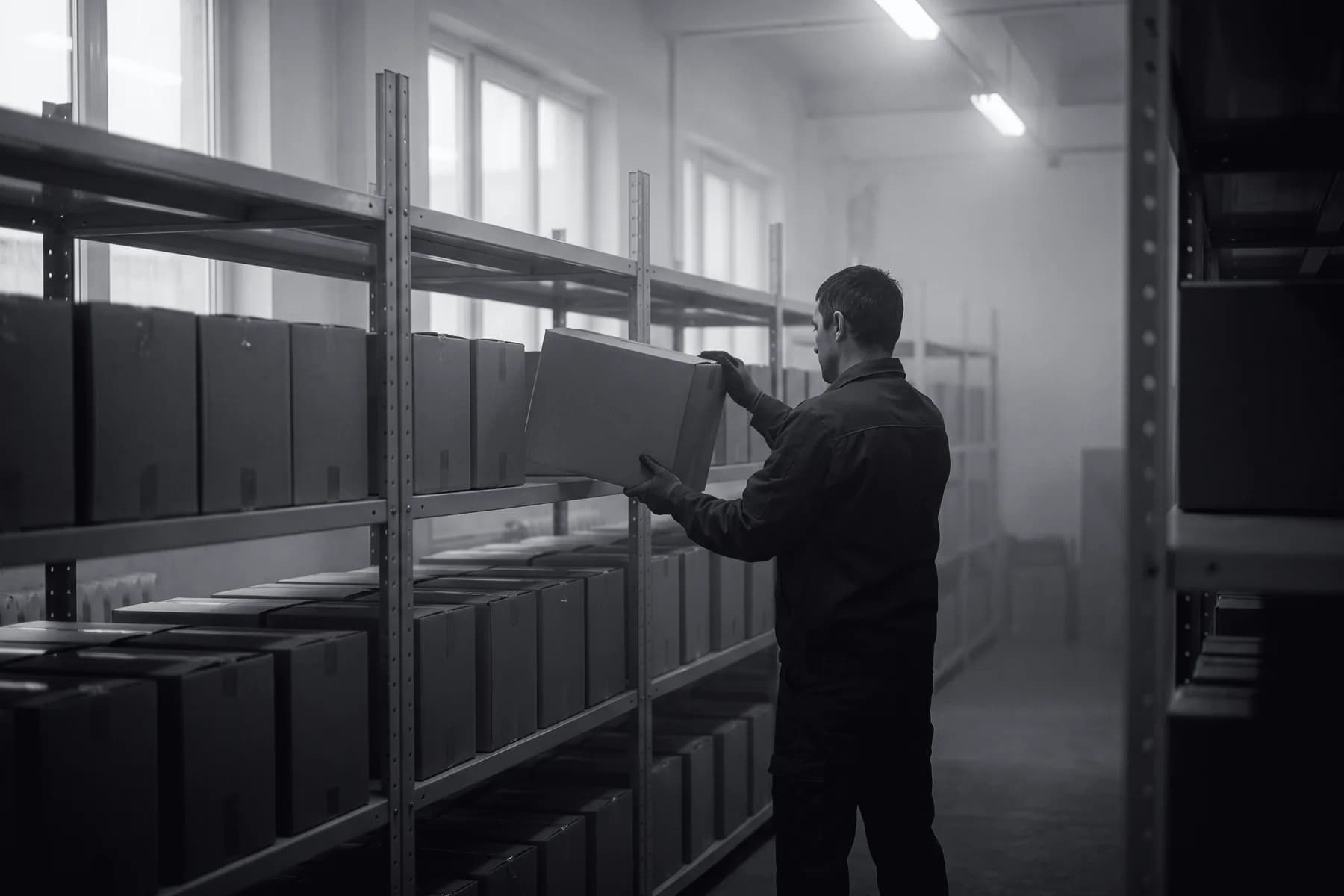
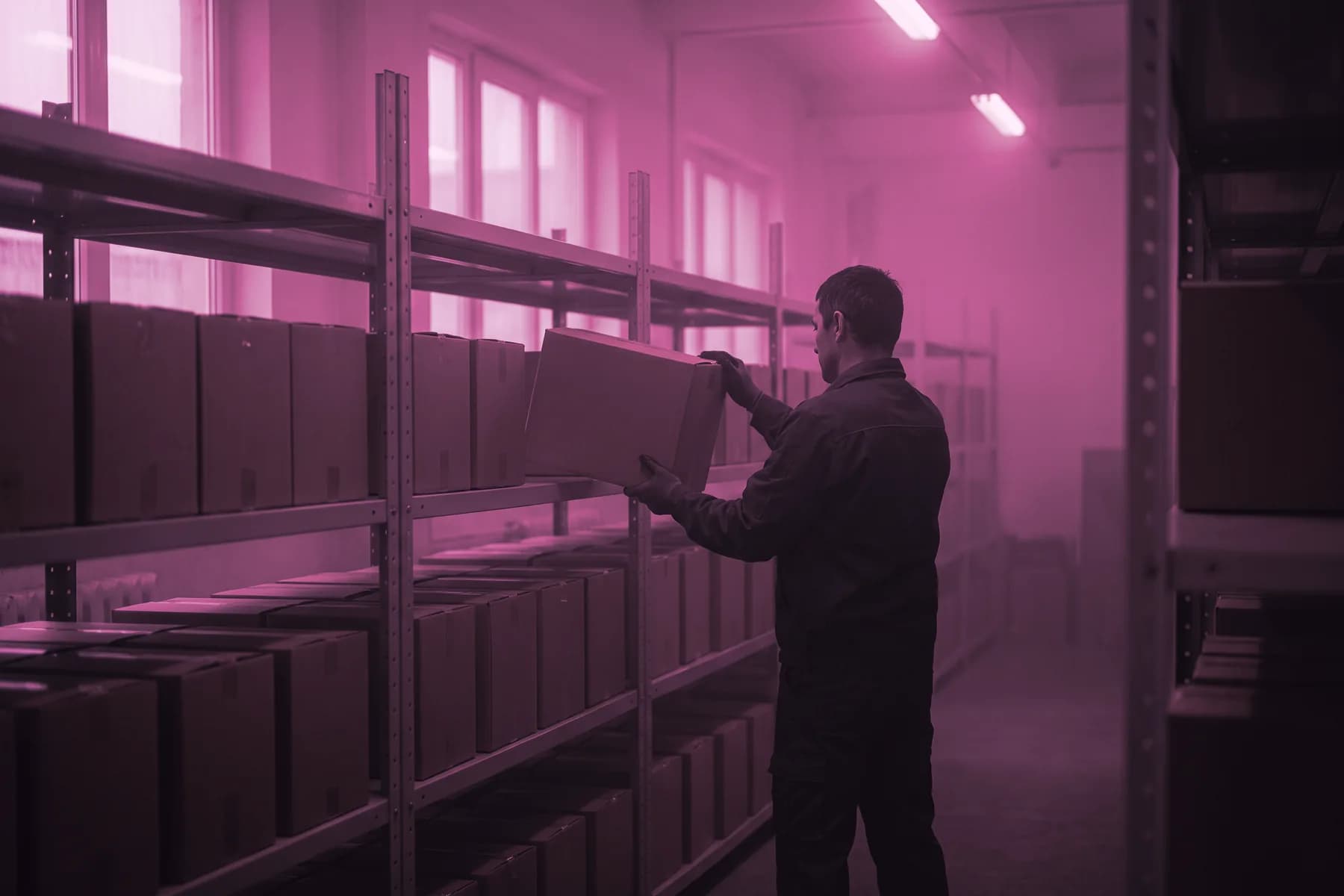
Illustrative analysis of this frame: Person, Product, Shelf gap.
Detected regionsRegion, normalised frame coordinates
- 01PersonObjectX 0.47 Y 0.30 A 8.5% ∠ −78°
- 02ProductObjectX 0.42 Y 0.40 A 1.1%
- 03Shelf gapScenarioX 0.26 Y 0.55 A 0.7% ∠ +3°
From detection to contextual understanding
Object detection on its own answers a narrow question: is there a person in this frame. In an operating environment that answer is nearly always yes, and nearly always uninteresting. The useful question is whether this person, in this place, doing this, at this time, is a normal state of the operation or a departure from it.
Arkania structures intelligence around three dimensions to reach that question: objects, people, vehicles, machinery, infrastructure; the interactions between them; and the scenarios those interactions form. The third dimension is where operational meaning lives, because almost nothing in an industrial environment is dangerous or wrong in isolation. A vehicle is fine. A vehicle inside a lift radius during a lift is not.
Deployment in industrial and edge environments
Where inference runs is decided by the environment, not by a product roadmap. Arkania supports deployment on-premise, at the edge on cameras, drones, robots and embedded devices, and on private or hybrid cloud, and integrates with systems already in operation through SCADA, OPC UA, MQTT and M2M.
Three constraints usually decide the answer, and any one of them can decide it alone: connectivity, where the edge of a field or a remote site cannot support a round trip to a central service; regulation and sovereignty, where operational imagery may not be handed to a third party at all; and continuity, where a dependency on an external provider is itself the risk being designed out.
Independence as an engineering property
Arkania designs, develops, trains and operates its own systems, owned at code, architecture and lifecycle level. In a marketing context that reads as a preference. In a mission-critical procurement it is frequently the requirement that decides whether a system can be considered at all.
The reason is simple: a model you license is a model whose availability, pricing, terms and continued existence are someone else's decision. In an environment where the system is expected to run for years without interruption, that is an unresolved dependency sitting at the centre of the architecture.
Scenario
An origin you can point at
A spray is the one diffuse phenomenon with an exact starting point. Everything downstream of the nozzle disperses and has no edge worth claiming, but the apex is a fact — so the region is traced as a cone from it, and the boom that carries the nozzle is marked as the thing responsible.
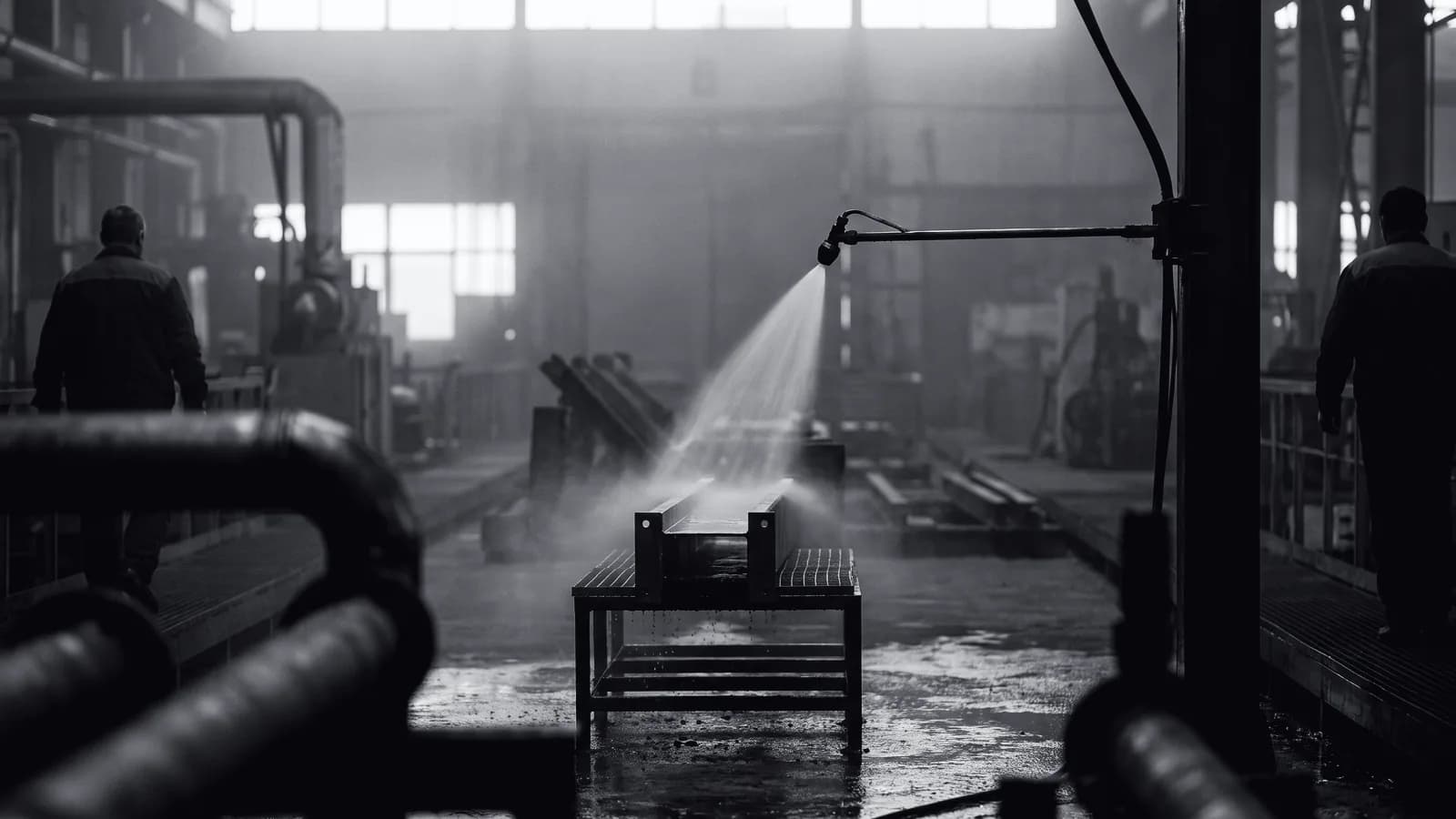
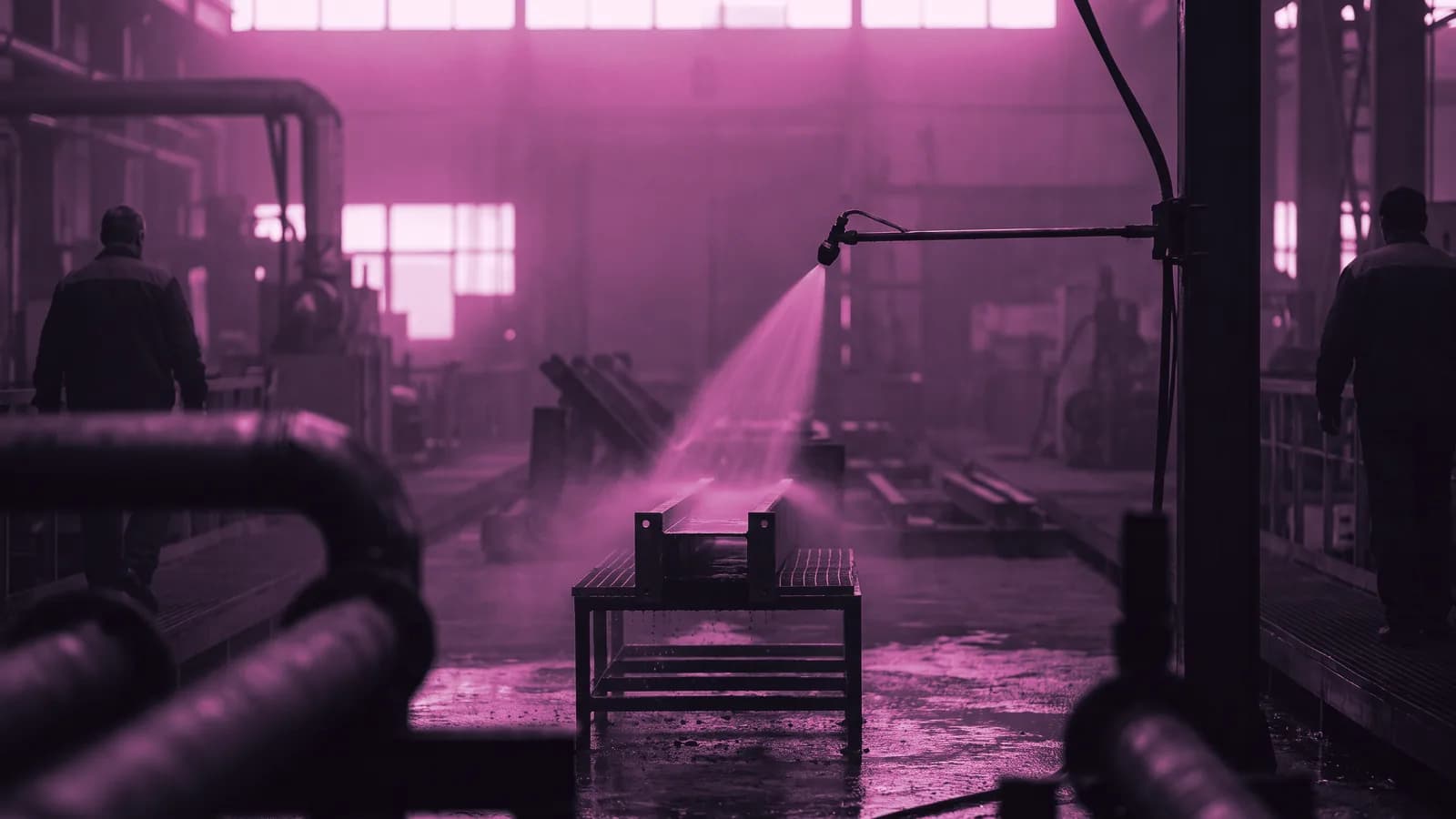
Illustrative analysis of this frame: Spray, Machinery.
Detected regionsRegion, normalised frame coordinates
- 01SprayScenarioX 0.46 Y 0.33 A 2.7% ∠ +63°
- 02MachineryObjectX 0.56 Y 0.24 A 2.0% ∠ +5°
Where industrial AI is deployed
Eight operating environments, each imposing a different constraint on what a system has to survive. The detection model is the same across all of them; what changes is which conditions matter and what the environment permits.
Common questions about industrial AI
What is industrial AI?
Artificial intelligence designed for physical operating environments rather than for information work, plants, fields, refineries, grids, terminals and cities. It is distinguished less by its subject matter than by its constraints: it has to run continuously, integrate with infrastructure already installed, and produce findings while a situation is still developing.
How is it different from enterprise AI?
Enterprise AI generally assumes reliable connectivity, tolerant latency and a human reviewing output before anything happens. Industrial AI assumes none of those. It is designed around intermittent connectivity, latency that is a correctness constraint rather than a performance one, and environments that cannot pause while a pilot is evaluated.
Does industrial AI require replacing existing infrastructure?
No, and a system that did would be the wrong system. Working with the cameras, sensors and control infrastructure already in place is a design requirement, with integration through SCADA, OPC UA, MQTT and M2M.
Can it run without cloud connectivity?
Yes. Deployment is supported on-premise and at the edge on cameras, drones, robots and embedded devices. Where connectivity, regulation or sovereignty rules out sending data to an external service, the deployment follows that constraint.
What does Arkania's claim actually assert?
Industrial grade means engineered for the constraints of physical operating environments. Independent means the models are designed, developed, trained and operated by Arkania, with ownership at code, architecture and lifecycle level and no dependency on third-party models or black-box inference.
Discuss an industrial AI project
Tell us about the environment, the constraint and the outcome you need. Enquiries are read by the team, not by a queue.
Industrial and enterprise enquiries · EN / ES