

07 · Operating environment
Security AI for large and complex sites
AI video analytics for physical security, perimeter, access and behaviour read continuously across an estate that already exists.
Physical security failed to scale long before AI arrived: an operator can hold perhaps a handful of camera feeds in genuine attention, and most sites have hundreds. The result is an estate that records everything and observes almost nothing. Arkania applies intelligent video analytics to that estate so that the cameras already installed become a continuously read source rather than an archive consulted after the fact.
The operating context
Two problems define a security operations room, and they pull in opposite directions. The first is coverage: there is far more camera than there is attention, so the practical mode of use becomes forensic, something happens, and the footage explains it afterwards. The second is noise. The obvious fix, motion-triggered alerting, fails on exactly the sites that need it most, because on a working site almost everything moves and an alert that fires on every movement is an alert nobody reads. What is needed is not more triggers but a judgement about whether what is happening is normal for this place at this time, which is a contextual question, not a detection one.
- Person
- Perimeter
- Vehicle
- Anomalous behaviour
- Risk pattern
What makes these environments difficult
- 01
There is far more camera estate than operator attention, so most feeds are unobserved most of the time.
- 02
Naive motion alerting produces volume rather than information, and a system that cries wolf is switched off by the people it was bought for.
- 03
What counts as normal is site-specific and time-specific. A loading bay busy at 09:00 and a loading bay busy at 03:00 are not the same observation.
- 04
Camera estates are old, heterogeneous and were installed for recording, not for analysis.
Interaction
A boundary, and the distance to it
A figure on a fence is a measurement problem before it is a security one: how far up, how far from the line, moving which way. The overlay reports the geometry the frame can support and leaves the judgement to whoever is watching it.
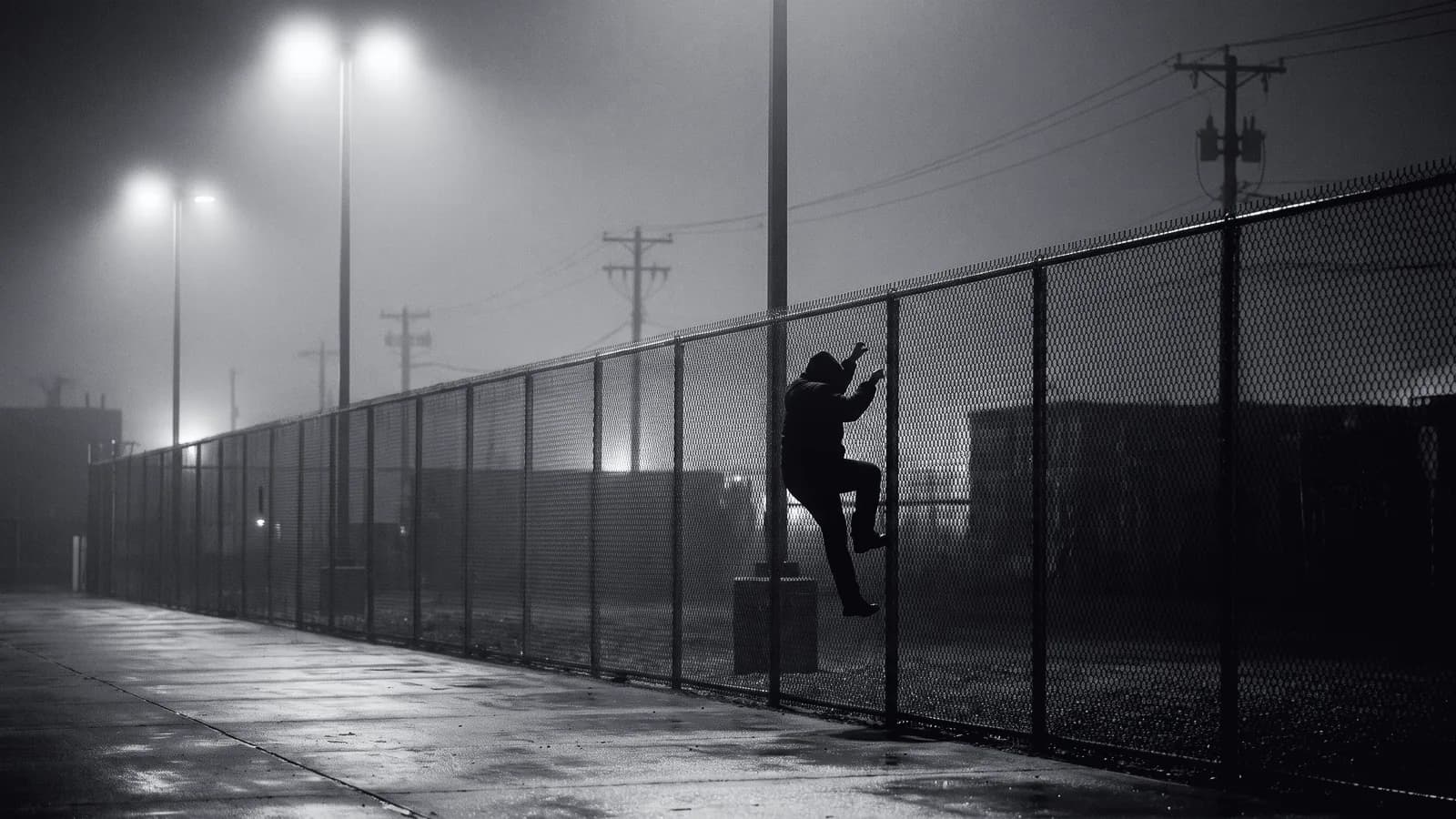
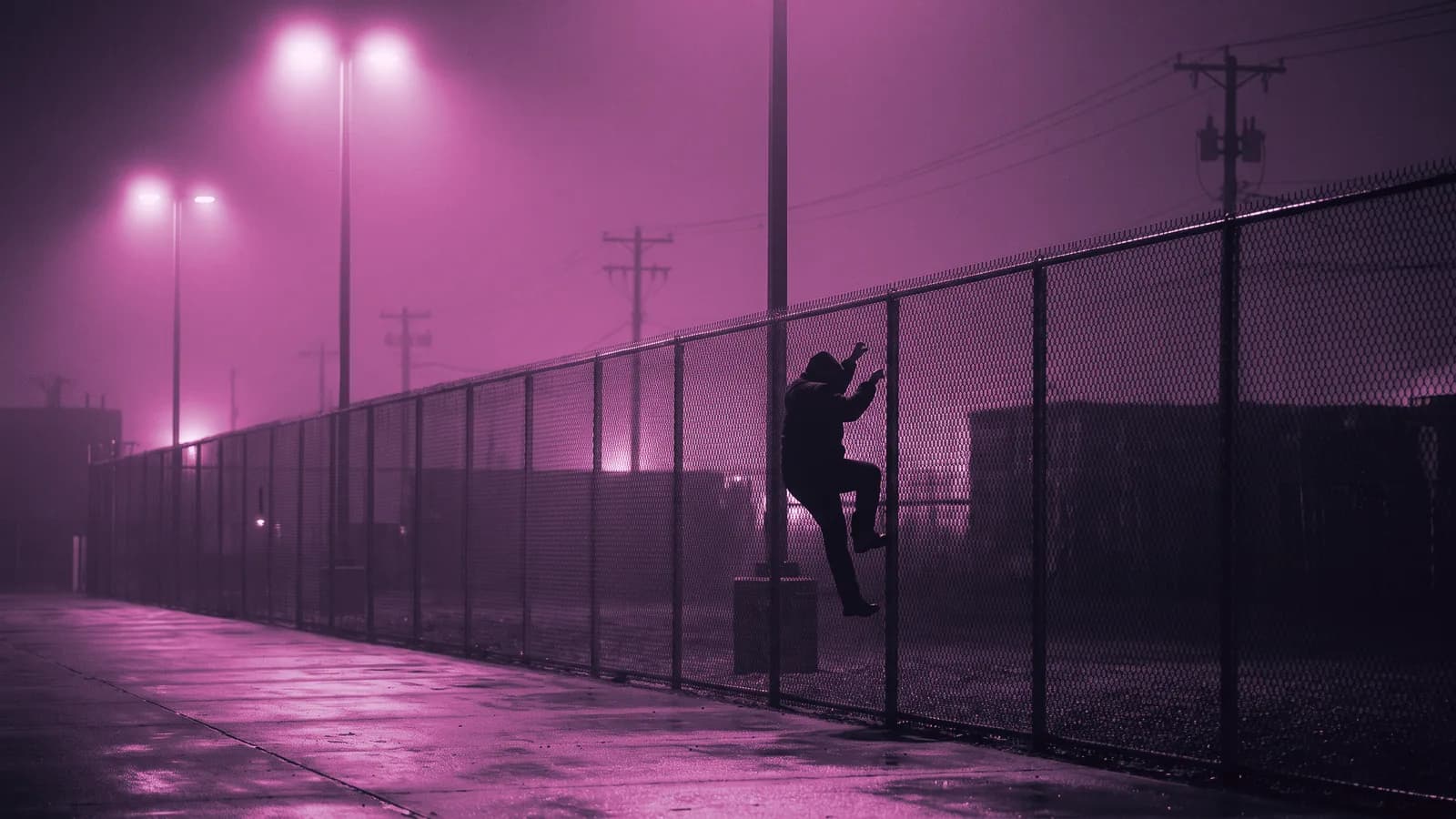
Illustrative analysis of this frame: Person, Barrier.
Detected regionsRegion, normalised frame coordinates
- 01PersonObjectX 0.54 Y 0.44 A 1.5% ∠ −89°
- 02BarrierObjectX 0.18 Y 0.23 A 23.3% ∠ +10°
What Arkania brings
- 01
Continuous reading of the installed camera estate, at a scale and duration where sustained human attention is not realistic.
- 02
Contextual understanding rather than isolated detections: objects, the interactions between them, and the scenarios those interactions form, which is what separates an event from a movement.
- 03
Findings routed to the people responsible for acting on them, with the auditability an incident review will require.
- 04
Deployment that follows the constraint, on-premise, at the edge on cameras and embedded devices, or in private cloud, with the client retaining control over data flows.
The AI capabilities that apply here
- 01AI video analytics
- Continuous reading of an existing camera estate, rather than review of what it recorded.
- 02Behavioural analysis
- Whether what is happening is anomalous for this place at this time, rather than whether something moved.
- 03Perimeter and access analytics
- Presence, approach and zone integrity across boundaries longer than any operator can watch.
- 04Incident intelligence
- Findings surfaced to the responsible team with the record behind them that a later review will need.
Scenario
A bag, and the space around it
A bag on a concourse floor is an ordinary object. A bag with nobody within eighteen metres of it for six minutes is an event, and both halves of that are in the reading: how long it has been still, and how far away the nearest person is. Neither is the detection on its own.
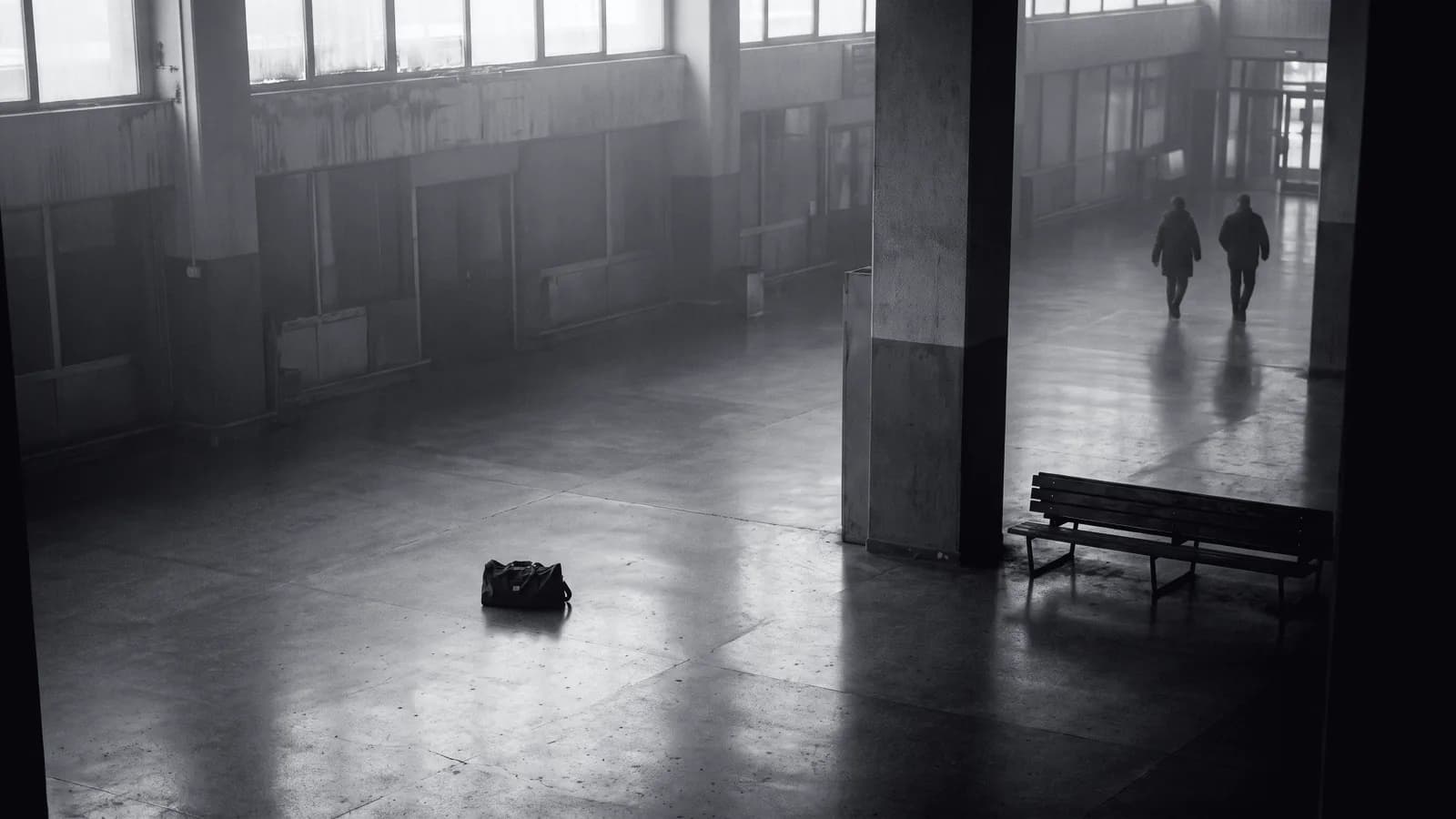
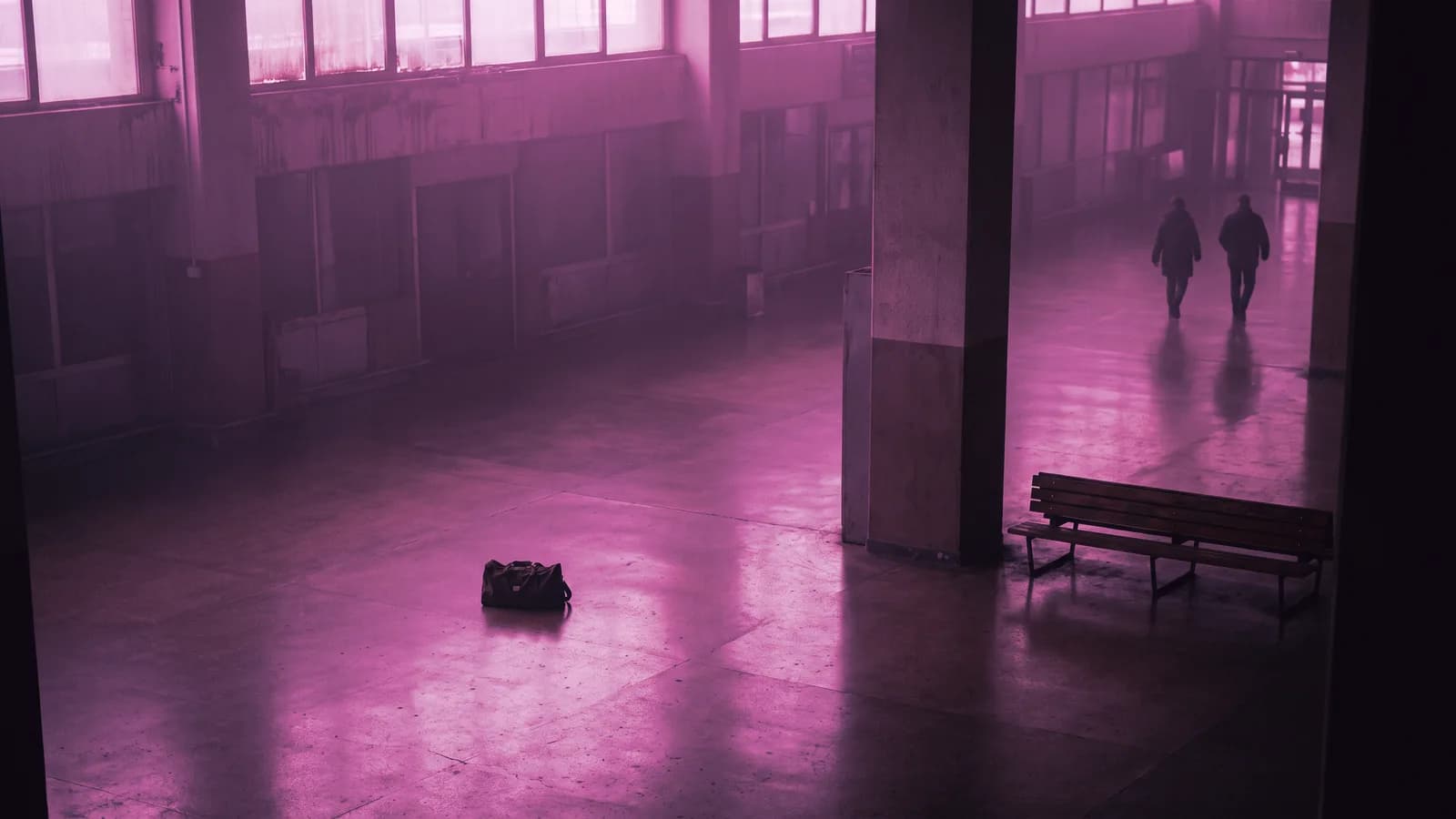
Illustrative analysis of this frame: Unattended item, Person.
Detected regionsRegion, normalised frame coordinates
- 01Unattended itemObjectX 0.33 Y 0.68 A 0.3% ∠ −3°
- 02PersonObjectX 0.84 Y 0.25 A 0.5% ∠ +90°
What the system is asked to recognise here
- 01
People and vehicles relative to perimeters, access points and controlled zones.
- 02
Perimeter integrity along boundaries too long for continuous human observation.
- 03
Anomalous behaviour measured against an area's own baseline for that time of day.
- 04
Risk patterns that only become visible across a long observation period.
- 05
Sequences, approach, dwell, departure, that carry meaning together and none apart.
Where this applies in a security operation
- 01
Large sites where camera count has long exceeded operator capacity.
- 02
Perimeters and access points where the finding is presence rather than incident.
- 03
Out-of-hours operation, where the baseline is the strongest signal available.
- 04
Estates where the requirement is to get more from installed cameras rather than to install more.
Operational value
The value is attention that does not degrade across a shift, applied to an estate that already exists, producing findings a team can act on rather than volume they learn to ignore. Arkania publishes no detection rates, false-alarm figures or response times: those depend entirely on site, estate and configuration, and a number quoted without them is a number that means nothing.
Common questions
Do we have to replace our cameras?
No. Working with the installed estate is a design requirement, and getting more from cameras already paid for is usually the point of the project.
How is this different from motion detection?
Motion detection answers whether something moved. This is structured around objects, the interactions between them and the scenarios those interactions form, which is what allows a routine movement and an anomalous one to be told apart.
Does footage leave our premises?
Not unless the deployment is designed that way. On-premise and edge inference are both supported, and the client retains control over data flows and ownership of trained models.
Can findings reach our existing control room systems?
Yes, through SCADA, OPC UA, MQTT and M2M, so findings arrive in the environment the team already works in.
Does Arkania publish false-alarm rates?
No. Those figures are meaningless without the site, the estate and the configuration they were measured under, so they are established during an engagement rather than advertised before one.
Discuss a project with Arkania
Tell us about the environment, the scale and the operational conditions. Requests are reviewed by the team, not by a queue.
Industrial and enterprise enquiries · EN / ES