

04 · Operating environment
AI for energy generation and grid infrastructure
Operational intelligence for monitoring critical assets, detecting anomalies and improving situational awareness across dispersed energy infrastructure.
Energy infrastructure is mostly unattended and mostly remote. Substations, switchyards, solar fields and wind sites run without anyone present, and the cameras covering them are usually there to be reviewed after something happened rather than to notice it while it does. Arkania applies computer vision and video analytics to that estate, on the devices already installed, so that dispersed, unmanned assets become continuously observed rather than periodically visited.
The operating context
The defining property of an energy estate is dispersion. Assets are spread over distances that make physical inspection a scheduled event rather than a continuous one, which means the interval between two inspections is the interval in which anything can happen unobserved. Meanwhile the control systems know a great deal about electrical state and nothing about physical state: SCADA will report a breaker position, not the fact that a person is inside the switchyard, that a panel is open, or that vegetation has grown into a clearance. Visual AI is the layer that reads physical state, and it earns its place by feeding the same control environment rather than standing beside it.
- Infrastructure
- Asset
- Person
- Anomalous behaviour
- Zone
What makes these environments difficult
- 01
Assets are dispersed and unmanned, so the operating model is inspection at intervals, and everything that matters happens between the intervals.
- 02
Connectivity at a remote site is thin, intermittent or expensive, which makes an architecture that streams everything to a central service the wrong shape for the estate it is meant to cover.
- 03
Regulatory and sovereignty requirements around critical infrastructure frequently rule out sending operational imagery to a third-party model.
- 04
The installed estate is long-lived and heterogeneous. Anything introduced has to work with cameras and control systems that will not be replaced on an AI project's schedule.
Scenario
Vapour where there should be none
A pressurised release is diffuse and largely transparent, so it is drawn as a soft field rather than as an outline. What is localised is the origin — the joint it is leaving from — and the plume is reported as an extent and a direction, which is what the frame can actually support.
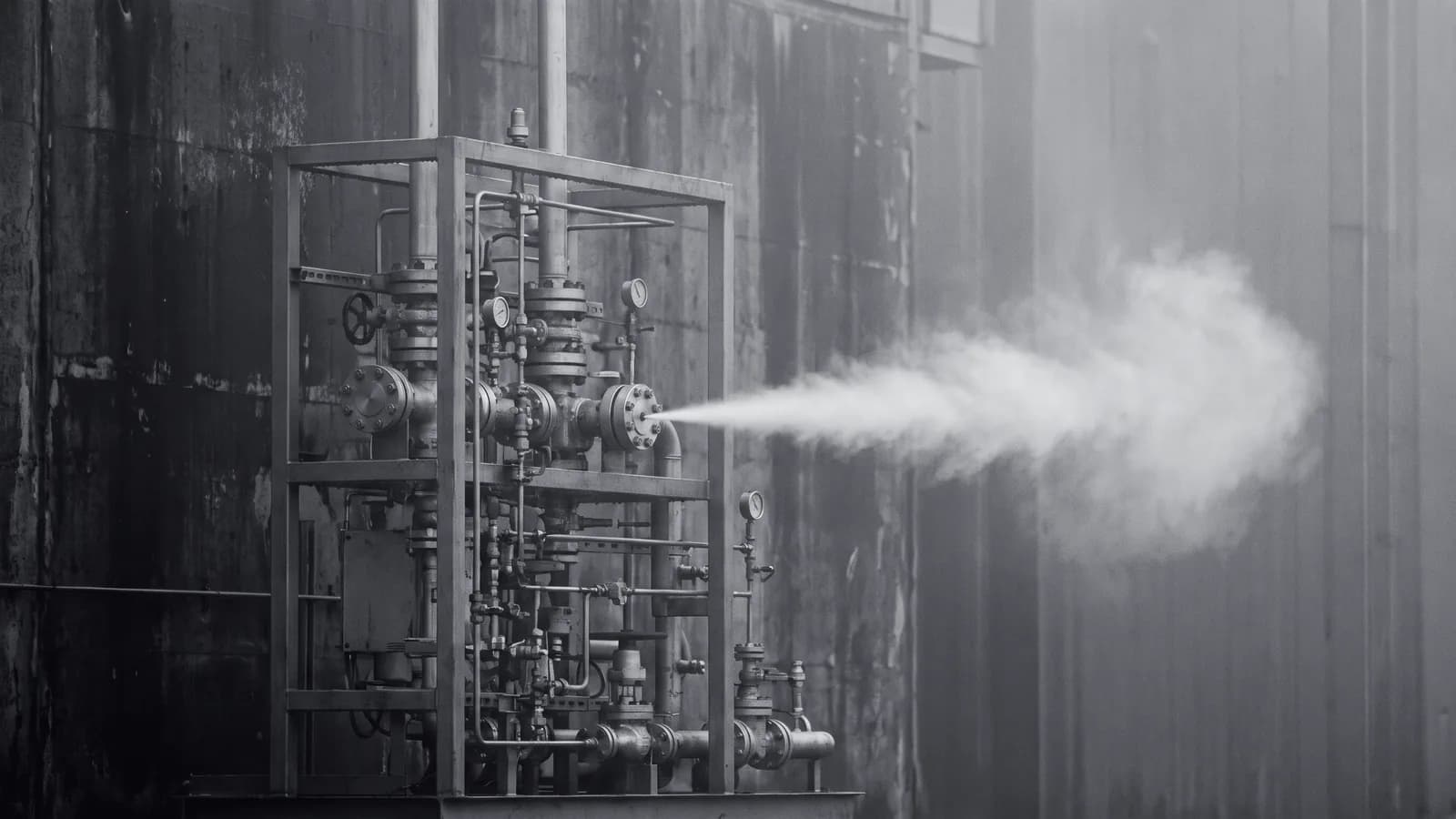
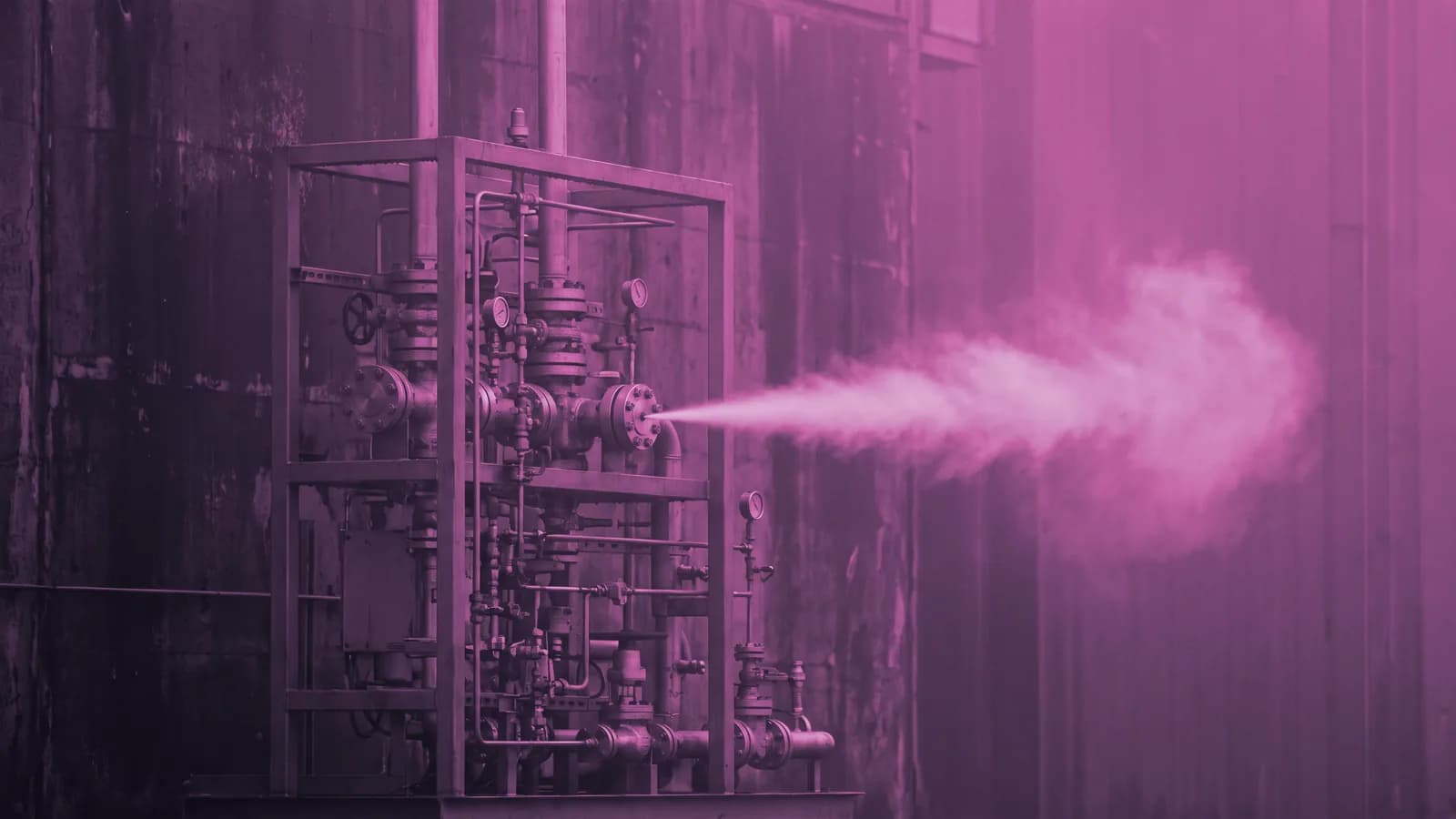
Illustrative analysis of this frame: Gas release, Valve, Machinery.
Detected regionsRegion, normalised frame coordinates
- 01Gas releaseScenarioX 0.46 Y 0.33 A 7.1% ∠ +7°
- 02Gas releaseScenarioX 0.47 Y 0.37
- 03ValveObjectX 0.44 Y 0.48 A 0.2% ∠ −1°
What Arkania brings
- 01
Inference at the edge on cameras, drones, robots and embedded devices, so a site with thin connectivity is still continuously observed rather than periodically uploaded.
- 02
Integration with the systems already in operation through SCADA, OPC UA, MQTT and M2M, so physical state arrives in the same control environment as electrical state.
- 03
Fully proprietary models, owned at code, architecture and lifecycle level, deployable where operational imagery may not leave the operator's control.
- 04
Contextual understanding rather than isolated detections: objects, the interactions between them, and the scenarios those interactions form.
The AI capabilities that apply here
- 01Infrastructure monitoring
- Continuous visual reading of fixed assets across dispersed, largely unmanned sites.
- 02Anomaly identification
- Deviation from an asset's own established normal state, rather than from a threshold written for a different site.
- 03Perimeter and access analytics
- Presence and approach at unmanned locations where any presence is itself the finding.
- 04Operational alerting
- Findings routed into the control environment operators already work in, with an auditable record behind them.
Object
Anomaly by comparison
Nothing about these two panels is remarkable in isolation. They are a finding only because eighteen hundred identical neighbours are behaving differently, which is the reading a repetitive asset makes possible and a one-off asset does not.
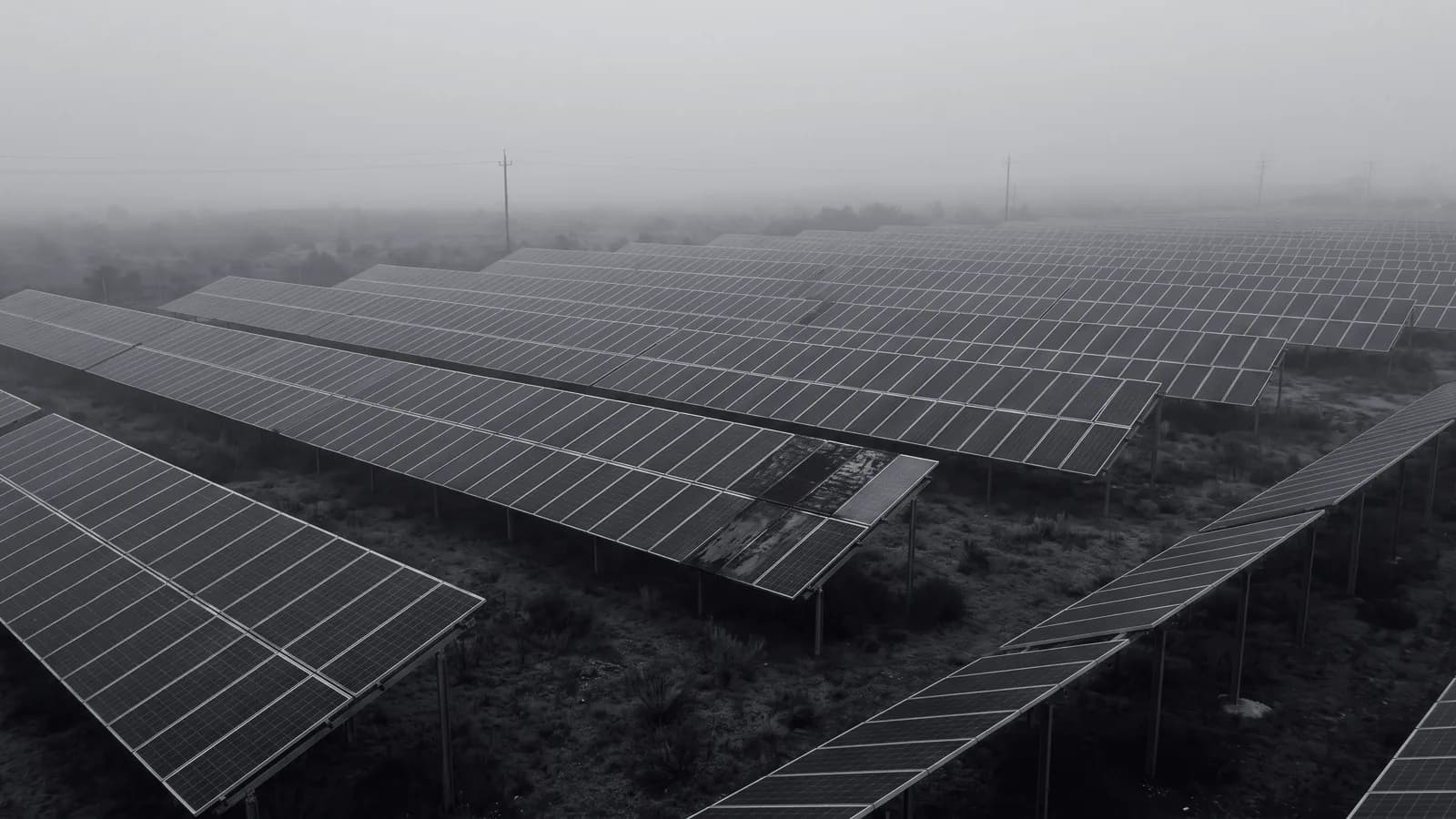
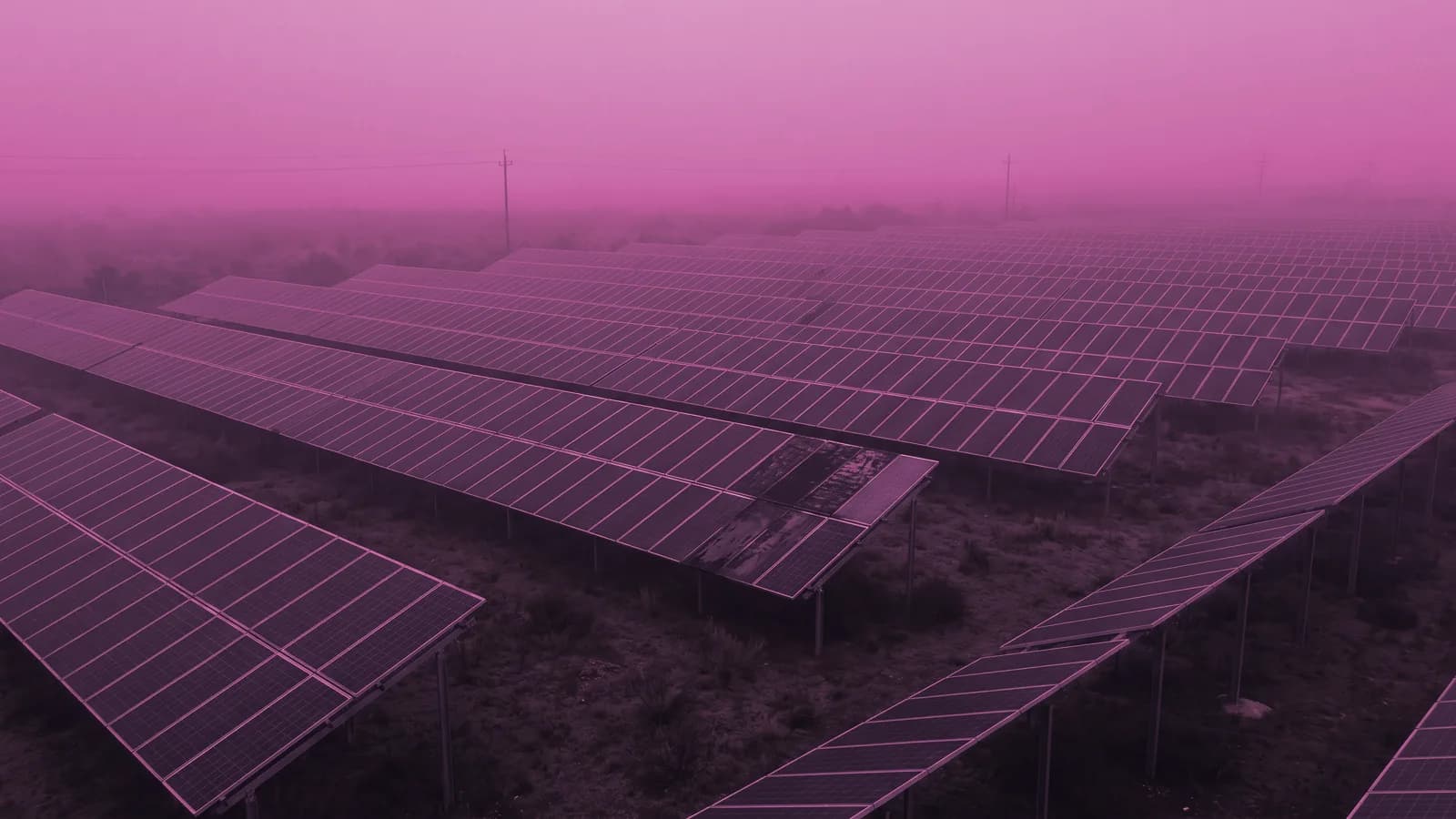
Illustrative analysis of this frame: Surface defect, PV panel.
Detected regionsRegion, normalised frame coordinates
- 01Surface defectScenarioX 0.54 Y 0.34
- 02PV panelObjectX 0.00 Y 0.57 A 11.0% ∠ +12°
What the system is asked to recognise here
- 01
Fixed infrastructure, transformers, switchgear, panels, towers, arrays, held against its own normal visual state.
- 02
People and vehicles at unmanned sites, where presence is the event rather than a detail of it.
- 03
Zone and clearance integrity around energised equipment.
- 04
Visible deviations such as an open enclosure, a displaced component or an obstruction that was not there before.
- 05
Patterns that only appear across a long observation period rather than in any single frame.
Where this applies across an energy estate
- 01
Unmanned substations and switchyards, where the question is continuous presence rather than scheduled inspection.
- 02
Generation sites and renewable arrays spread across an area too large to walk regularly.
- 03
Transmission and distribution corridors, where access and clearance are the recurring conditions.
- 04
Remote assets where connectivity decides the architecture, and inference has to sit next to the camera.
Operational value
The value is that the interval between inspections stops being a blind interval, on an estate that is already instrumented electrically and barely instrumented visually, without operational imagery leaving the operator's control. Arkania does not publish availability, detection or response figures it cannot evidence per deployment; what a given installation delivers is established during the engagement.
Common questions
Will this work at sites with poor connectivity?
That is the case it is designed for. Inference runs at the edge on cameras, drones, robots and embedded devices, so the site is observed locally rather than depending on a link to a central service.
Does operational imagery leave our infrastructure?
Not unless the deployment is designed that way. On-premise and edge inference are both supported, and the client retains control over data flows and ownership of trained models.
How does it reach our SCADA environment?
Through SCADA, OPC UA, MQTT and M2M. Visual findings are meant to arrive alongside the telemetry operators already trust, not in a separate system.
Do we need to replace the camera estate?
No. Working with installed infrastructure is a design requirement. Genuine coverage gaps are identified as gaps in the environment rather than resolved by replacing equipment that works.
Are the models third-party?
No. Arkania designs, develops, trains and operates its own models, with ownership at code, architecture and lifecycle level and no dependency on external providers for continuity.
Related environments
Related topics
Discuss a project with Arkania
Tell us about the environment, the scale and the operational conditions. Requests are reviewed by the team, not by a queue.
Industrial and enterprise enquiries · EN / ES