

05 · Operating environment
AI for production and manufacturing lines
Computer vision for manufacturing lines: operating sequence, operator–machine interaction and deviation, read at the speed the line runs.
A production line is the one industrial environment where the correct state is precisely defined, there is a sequence, and there is a way it is supposed to run. That makes deviation meaningful in a way it rarely is elsewhere, and it is what computer vision is well suited to read: not whether an object is present, but whether what is happening matches how this line is supposed to operate.
The operating context
Production environments are dense, repetitive and fast, and that combination defeats human observation for a specific reason: repetition is exactly what attention adapts to. A line running correctly for six hours trains the observer to stop seeing it. Automated inspection exists on many lines but is usually locked to a single station and a single measurement, it knows whether this part passed, not whether the operator reached across a moving element to place it. The space between stations, and the sequence across them, is where visual AI adds something the existing instrumentation does not have.
- Machinery
- Person
- Interaction
- Operational sequence
- Anomalous behaviour
What makes these environments difficult
- 01
Cycle times are short, so a finding that arrives after the cycle has completed is a record rather than an intervention.
- 02
Correct and incorrect often differ by very little, an order, a posture, a hand position, which makes this a problem of context rather than of object presence.
- 03
Lines are reconfigured for product changes, and a system tied to a fixed geometry becomes wrong the first time the layout moves.
- 04
Any addition has to coexist with production. A line does not stop to accommodate a pilot.
Scenario
Forty centimetres in twelve square metres
Quality control is the case where the finding is smaller than the asset by three orders of magnitude. The whole value is in resolving the defect against the sound surface around it, which is why the sheet is outlined at all.
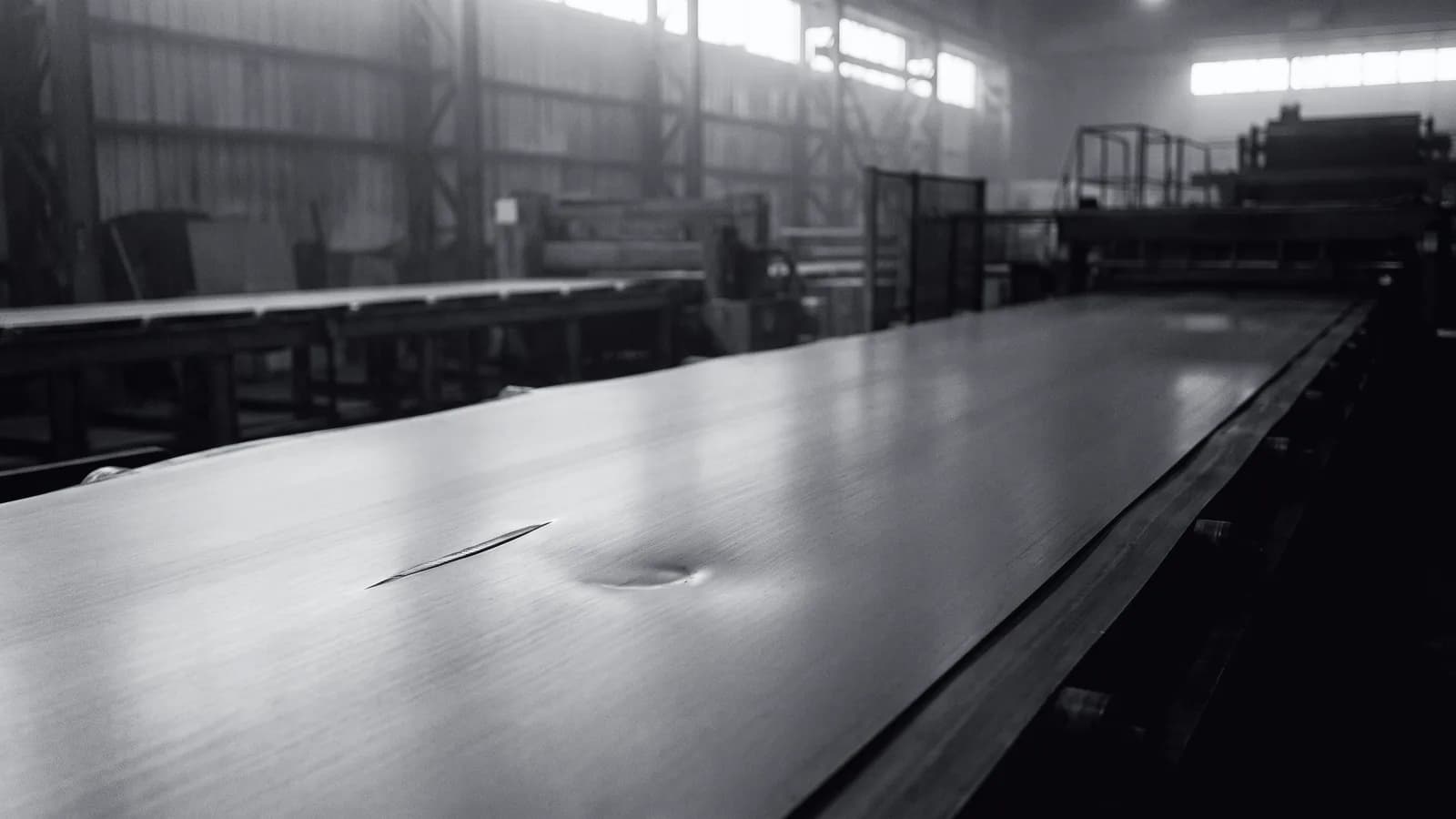
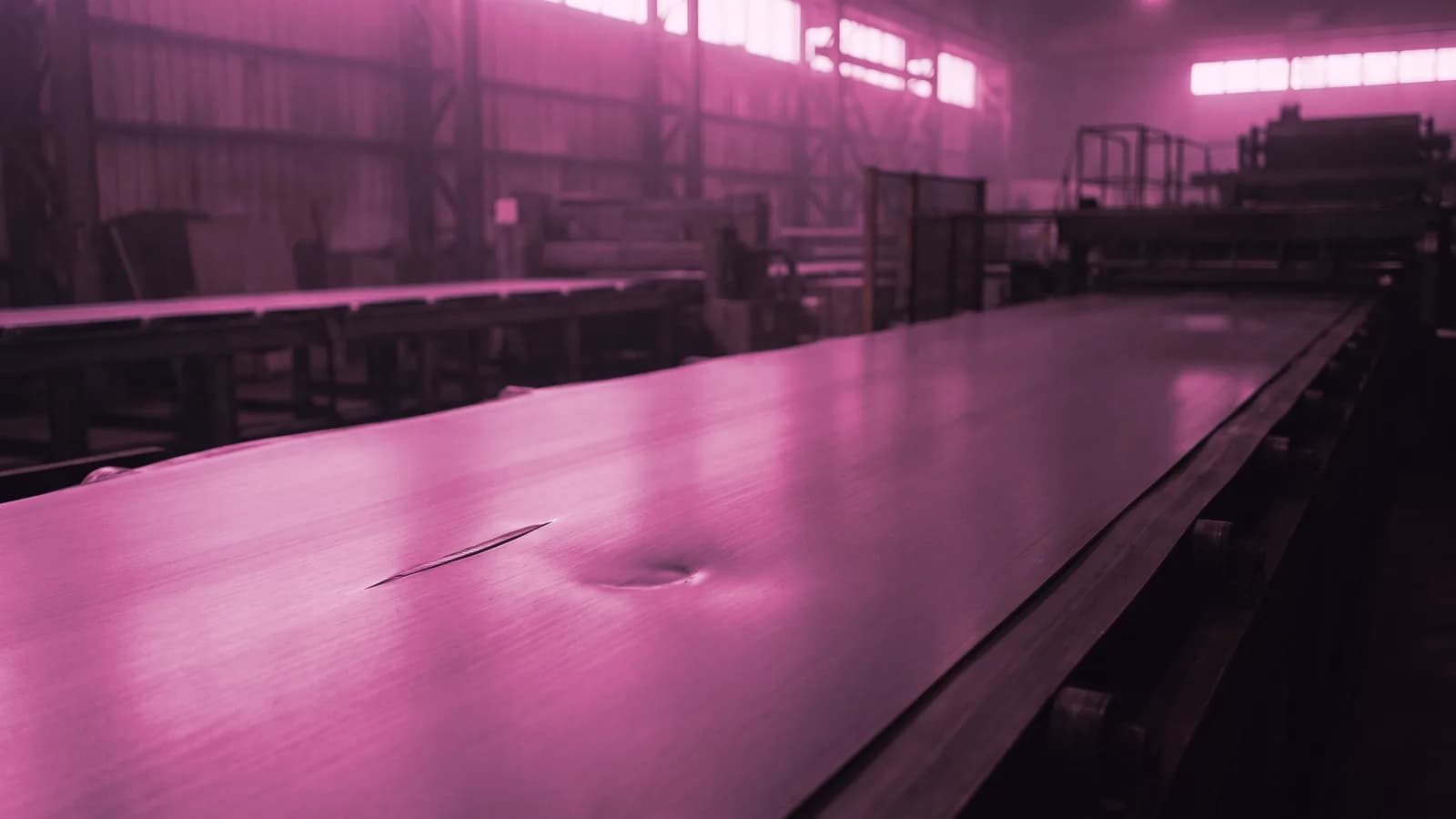
Illustrative analysis of this frame: Surface defect, Panel.
Detected regionsRegion, normalised frame coordinates
- 01Surface defectScenarioX 0.25 Y 0.67 A 1.3% ∠ +3°
- 02PanelObjectX 0.00 Y 0.33 A 25.4% ∠ +16°
What Arkania brings
- 01
Detection and recognition running on-premise or at the edge, next to the line rather than across a network round trip.
- 02
Integration with the systems already in operation through SCADA, OPC UA, MQTT and M2M, so findings land where line data already lands.
- 03
Fully proprietary models, owned at code, architecture and lifecycle level, with model specialisation to a specific line rather than a generic configuration.
- 04
Contextual understanding rather than isolated detections: objects, the interactions between them, and the scenarios those interactions form.
The AI capabilities that apply here
- 01Industrial computer vision
- Visual reading of machinery, operators and material along the line, from the camera estate in place.
- 02Sequence recognition
- Whether an operating sequence is running as it is supposed to, rather than whether a single element is present.
- 03Interaction analysis
- The relationship between operator and equipment, approach, handling, posture, where most line risk sits.
- 04Anomaly identification
- Deviation from this line's own established operating pattern, not from a generic rule.
Scenario
Smoke, before anything else happens
Smoke is usually the first thing a camera can see, and it is the more defensible of the two claims a frame like this could make. It is segmented as a region with a measured extent, in a bay that is otherwise an entirely ordinary shift.
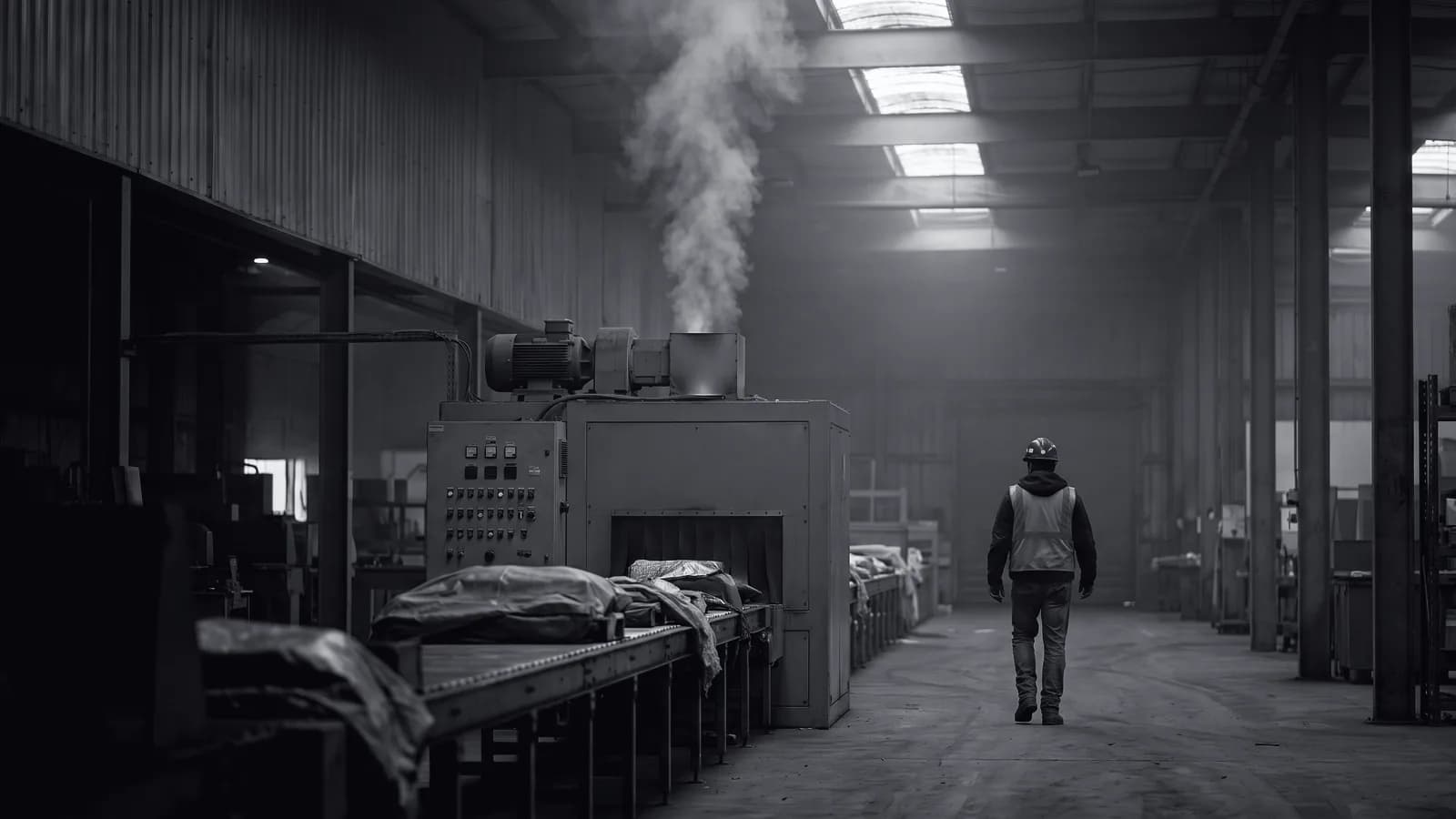
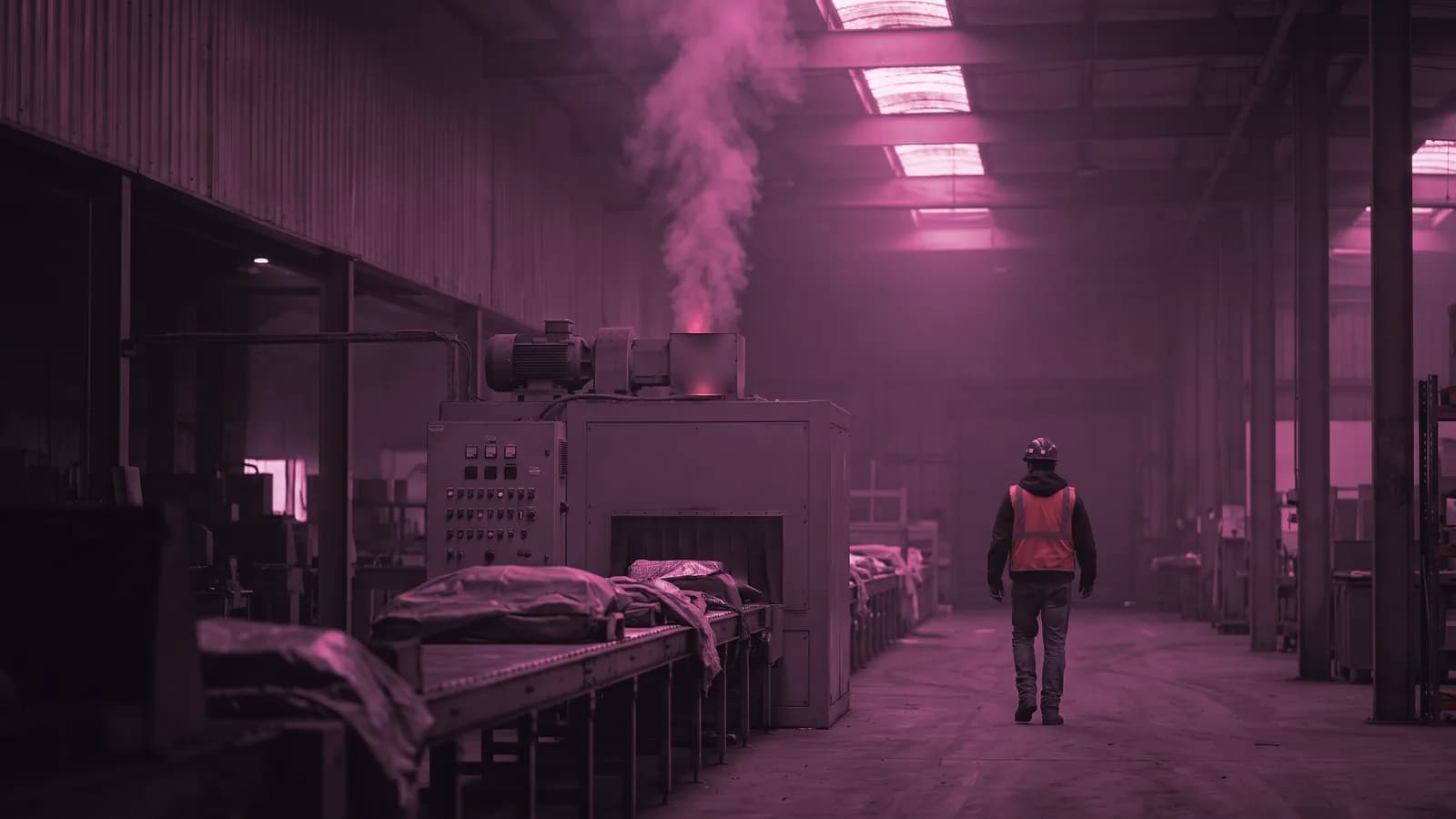
Illustrative analysis of this frame: Smoke, Thermal, Machinery, Person.
Detected regionsRegion, normalised frame coordinates
- 01SmokeScenarioX 0.48 Y 0.03 A 1.9% ∠ +76°
- 02ThermalScenarioX 0.49 Y 0.47
- 03MachineryObjectX 0.31 Y 0.44 A 11.3%
What the system is asked to recognise here
- 01
Operating sequences performed out of their expected order.
- 02
Operator–machine interaction, including approach to and handling of equipment in motion.
- 03
Posture and ergonomics during tool and material handling.
- 04
Machinery states visible from outside the machine, position, motion, obstruction.
- 05
Deviation from the line's own operating pattern across a shift rather than within a frame.
Where this applies on a production line
- 01
The space between instrumented stations, which existing inspection does not cover.
- 02
Operating sequence adherence, where the defect is an order rather than a measurement.
- 03
Operator safety around equipment that is hazardous only while it is in motion.
- 04
Long-period pattern observation across a shift, where repetition defeats human attention.
Operational value
The value is that the sequence itself becomes observable, continuously and without depending on attention that repetition erodes, on cameras already installed and without line data or trained models leaving the plant. Arkania does not publish throughput, defect or accuracy figures it cannot evidence per deployment; what a given line achieves is established during the engagement.
Common questions
Is this machine vision for quality inspection?
It is adjacent to it rather than a replacement for it. Station-level inspection measures a part; this reads the environment around the line, sequence, interaction, presence and deviation, which is the part existing inspection generally does not cover.
What happens when we reconfigure the line?
Reconfiguration is expected. Models are specialised to a specific environment, and re-specialisation when the environment changes is part of the lifecycle rather than a new project.
Does line imagery leave the plant?
Not unless the deployment is designed that way. On-premise and edge inference are both supported, and the client retains control over data flows and ownership of trained models.
How does it connect to our line systems?
Through SCADA, OPC UA, MQTT and M2M, so findings arrive alongside the line data that is already collected.
Are the models third-party?
No. Arkania designs, develops, trains and operates its own models, with ownership at code, architecture and lifecycle level.
Related topics
Discuss a project with Arkania
Tell us about the environment, the scale and the operational conditions. Requests are reviewed by the team, not by a queue.
Industrial and enterprise enquiries · EN / ES